Category: Convicted

  • Tadrus Capital AI fraud by Mina Tadrus

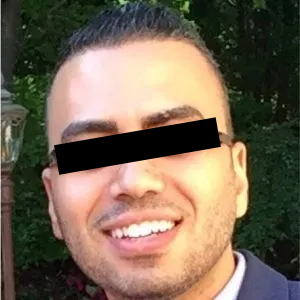
    Mina Tadrus of Tadrus Capital AI fraud
    Mina Tadrus of Tadrus Capital AI fraud

    Mina Tadrus is the founder and Chief Executive Officer of Tadrus Capital LLC, a financial technology company that was marketed as a hedge fund utilizing artificial intelligence-driven, high-frequency trading strategies to generate high returns for investors. According to court documents and regulatory filings, Tadrus falsely claimed that his fund would deliver guaranteed annual returns of 18% to 30% by employing AI-based quantitative models. He raised over $5 million from at least 31 investors, primarily from the Egyptian-American Coptic Christian community, by promoting the fund as “recession-proof” and leveraging the excitement around AI technology.

    However, Tadrus was charged with investment adviser fraud in September 2023 by the U.S. Department of Justice, which alleged that he operated a Ponzi scheme. The Securities and Exchange Commission (SEC) filed a civil complaint in November 2023, accusing Tadrus of misrepresenting the fund’s investment strategy and using investor funds to pay earlier investors, cover personal expenses, and purchase luxury items, rather than investing them as promised. In February 2025, Tadrus pled guilty to the charges in a federal court in Brooklyn, New York, before Judge Hector Gonzalez. He was sentenced to 30 months in prison on August 19, 2025, and ordered to pay $4,224,850 in restitution.

    “While Tadrus sold a dream of high-profits to his investors, the only return they saw was the negative result of being swindled by someone they trusted. Today’s sentence and imposed restitution sees that Tadrus will spend real time behind bars and pay for his crimes. This new reality is not AI generated,” stated IRS-CI New York Special Agent in Charge Chavis.

    As set forth in court filings, Tadrus, a former stockbroker registered with the Financial Industry Regulatory Authority (FINRA) and derivatives consultant for a global financial institution, founded Tadrus Capital LLC in June 2020. Tadrus claimed to operate “the world’s first private high-yielding and fixed-income quantitative hedge fund” powered by artificial intelligence (AI) high-frequency trading models to guarantee investors up to 30% returns annually. In reality, Tadrus used no AI-based algorithmic trading. Tadrus also falsely claimed that Tadrus Capital was “recession-proof” and maintained liquidity with access to $5.5 billion in purchasing power.

    Prior to founding Tadrus Capital, Tadrus worked as a derivatives consultant at JPMorgan Chase and later as a trader and supervisor at T3 Trading Group. He holds a Master of Arts in Intelligence Studies from American Military University (AMU) and a Juris Doctorate from the University of Dayton School of Law. Despite claims in earlier media coverage that he managed institutional capital using algorithmic trading and founded a quantitative alternative asset management firm, the legal proceedings confirm that the investment activities he described were not genuine, and the fund did not engage in the AI-powered trading it advertised.

  • $20M Fraud Scheme by Babatunde Francis Ayeni

    Babatunde Francis Ayeni
    Babatunde Francis Ayeni

    MOBILE, AL – A Nigerian national was sentenced to ten years in federal prison for his role in a massive cyber fraud conspiracy that victimized over 400 people across the United States resulting in a collective loss of nearly $20 million.

    According to court documents and testimony, 33-year-old Babatunde Francis Ayeni, a citizen of Nigeria living in the United Kingdom at the time of his arrest, was involved in a sophisticated business e-mail compromise scheme targeting real estate transactions in the United States. Ayeni pleaded guilty to conspiracy to commit wire fraud in April of 2024.

    The conspiracy was carried out by individuals operating out of Nigeria and the United Arab Emirates To carry out this scheme, conspirators sent phishing e-mails containing attachments and links embedded with malicious code to title companies, real estate agents, and real estate attorneys across the United States. If an employee at a targeted real estate business clicked on the malicious link or attachment, they were prompted to enter their e-mail account login information. The employee’s login credentials were captured and sent to e-mail accounts controlled by Ayeni and other co-conspirators. The conspirators then logged into the employee’s e-mail and monitored the account for transactions where a buyer was scheduled to make a payment as part of a real estate transaction. Ayeni and other conspirators then sent e-mails to the purchaser from the compromised e-mail account. These e-mails contained wiring instructions. When the purchaser wired the funds as instructed in the e-mail, the money was deposited into bank accounts associated with the criminals instead of the legitimate real estate transaction. Ayeni fraudulently obtained the e-mail credentials of a real estate title company in Gulf Shores, Alabama, allowing him and co-conspirators to defraud victims in the Southern District of Alabama, and elsewhere.

    Over 400 people across the United States were victims of the conspiracy. Of these, 231 victims were unable to reverse the wire transactions in time and lost their entire transaction. The collective loss of these 231 victims was $19,599,969.46.

    During the multi-day sentencing hearing, United States District Judge Terry Moorer heard the impact of this crime from nearly twenty victims. In addition to those who spoke in court, numerous victims provided victim impact statements about how the crime affected them, noting that in addition to losing all of the money they saved for the purchase of a new home, they felt significant shame, despair, and depression due to being victimized the way they were.

    United States Attorney Sean P. Costello said, “Cyber-enabled crimes can cause substantial and lasting harm to victims in an instant. Criminals across the world may believe that they are causing no harm to their victims and that they are safe behind their keyboards, but this case proves otherwise. With our law enforcement partners, we will continue to aggressively investigate, pursue, and hold accountable the crooks who perpetrate frauds online, wherever they are.”

    Paul Brown, Special Agent in Charge of the Mobile Division of the FBI, said, “This type of behavior will not be tolerated in Alabama. After listening to our citizens speak about how the loss of funds impacted their lives, and the subsequent loss of what they thought was down payments for their future homes, I am pleased to see Ayeni receive a substantial sentence for these crimes. FBI Mobile will continue to educate the public about the potential dangers of online activity. If you believe you have been the victim of online fraud, please visit IC3.gov to file an official report.”

    Co-defendants Feyisayo Ogunsanwo and Yusuf Lasisi remain at-large and are believed to be outside the United States. The United States continues to actively seek their arrest and extradition to face justice in this case.

    To learn more about business email compromise scams, please visit www.fbi.gov/how-we-can-help-you/scams-and-safety/common-scams-and-crimes/business-email-compromise and www.ic3.gov/ Media/Y2023/PSA230609. Anyone who has been the victim of an internet-based crime should contact the Internet Crime Complaint Center (IC3) at www.ic3.gov.

    This case was investigated by the Federal Bureau of Investigation with assistance from law enforcement partners in the United Kingdom and elsewhere.

    Assistant U.S. Attorney Christopher Bodnar prosecuted the case on behalf of the United States. Substantial assistance was also provided by Amanda Chadwick and Rachel Yasser with the Department of Justice Office of International Affairs.